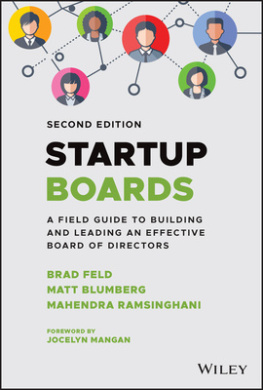
Description
Foreword Preface Section 1: Board Fundamentals Chapter 1: Introduction What’s New in the Second Edition Who This Book Is For Magic Words, Phrases, Abbreviations, and Style Chapter 2: The Board’s Purpose Accountability General Responsibilities Chapter 3: Legal Characteristics Board Member Legal Duties Addressing Conflicting Duties Benefit Corporations and the B Corp Movement Should You Get Directors and Officers Insurance? Chapter 4: Board Member Roles Chair or Lead Director Executive Chair Should You Be Chair of Your Board? Independent Board Members Board Observers Outside Counsel Chapter 5: Board Functions The Role of Board Committees Informal Responsibilities of a Board Control Priorities Being Rich and Queen (or King) Shareholder Rights Economic and Performance Priorities Emotional Priorities: Trust, Judgment, and Transparency Section 2: Creating Your Board Chapter 6: Size and Composition Management Investors Independents Matt’s Rule of 1s Chapter 7: VCs and Boards Chapter 8: Board Evolution Startup Stages Limiting the Number of Investor Board Members Managing Independent Seats Chapter 9: What to Look for in a Director General Skills Fit With Your Existing Board What Does Your Company Need? Experiences Attributes Governance Philosophy Chapter 10: Recruiting and Interviewing Board Members Sourcing The Interview Process Interviewing VCs Before They Join Your Board Chapter 11: Compensation VCs and Management Independent Directors Chapter 12: Board Diversity Unconscious Bias The First Step: Appoint Independent Directors Early The Second Step: Open Your Search to Board Ready First-Timers Chapter 13: Onboarding Your Directors Using Employee Onboarding as a Guide Onboarding New Directors Interacting With Your Team Chapter 14: Removing a Board Member Removing a Founder Director Removing an Investor Director Removing an Independent Director Getting Rid of the Entire Board Chapter 15: Is an Advisory Board Useful? Board of Directors vs. Advisory Board Attributes of a Useful Advisory Board Member Selecting Advisory Board Members Building an Advisory Board Challenges of Advisory Boards Section 3: Preparing For and Running the Board Meeting Chapter 16: Preparing for the Board Meeting The Value of Preparation The Meeting Agenda Focus on Critical Items The Board Book Board Book Example: Matt’s Board Book Board Book Example: Rover Sending Out the Board Book Creating an Annual Calendar Chapter 17: Meeting Dynamics Seating The Meeting Length Including Your Team in the Board Meeting Slides or No Slides? Discussion or Decision Item? The Executive Session and Closed Session A Board Call Instead of a Meeting Remote Attendees and Hybrid Meetings The Post-Meeting Survey Post Meeting Chapter 18: Motions and Votes Robert’s Rules of Order Have Your Lawyer at the Meeting The Mechanics of Voting What If You Don’t Agree? Dealing with Formal Items Minutes Unanimous Written Consent Section 4: Between Meetings: Ongoing Work Chapter 19: Managing Ongoing Communication What the Board Expects From a CEO Communicate Both Good and Bad News Chapter 20: Committees Committee Meeting Formalities Compensation Audit Nominating CEO Expenses Chapter 21: Mentors and Learning by Doing Mentorship and Vulnerability Learning by Doing Chapter 22: CEO Transitions Situations That Lead to a CEO Change Scale Up With Growth Why Boards Fire CEOs Planning for Healthy Transitions Section 5: Transactions Chapter 23: Financings New Investor-Led Round Insider-Led Round The Down Round and a Rights Offering How Involved Should VCs Be in Financings? Convertible Notes Venture Debt Chapter 24: Stock Option Grants and 409A Valuations Chapter 25: Selling A Company Confidentiality Fiduciary Responsibility Your Outside Counsel’s Role Acquihire Carve-Outs and 280G Shareholder Representative Chapter 26: Buying a Company Negotiating and Structuring the Deal Financing an Acquisition Board Approvals Managing Transaction and Post-deal Integration Chapter 27: Going Public Process Committees Confidentiality Insider Status VCs on Public Company Boards SPACs Chapter 28: Going Out of Business The Zone of Insolvency Responsibility to Creditors Responsibility to Shareholders Liability Chapter 11 Chapter 7 Assignment for the Benefit of Creditors Section 6: For Independent Directors and Aspiring Board Members Chapter 29: Preparing for Your First Board Role Chapter 30: Interviewing for a Board Role The Interview Diligence Items to Explore Chapter 31: Your First Board Meeting Chapter 32: Communicating Effectively Chapter 33: How To Be a Great Board Member Chapter 34: Conclusion Acknowledgments Bibliography