Description
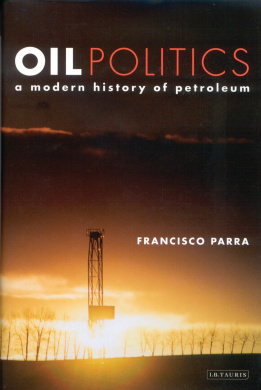
The politics of oil revolves around its price and the reliability of its suppliers. In turn, widespread international tensions and armed conflict are rooted in these politics. Not surprisingly: the price of oil is managed by a cartel – OPEC – some of whose member governments are deeply hostile to the United States and other major importers of oil. Ironically, the United States and many others, especially non-OPEC producers of energy, have come to rely on OPEC to set prices that encourage the development of high-cost oil elsewhere, and thus promote some diversity of supply. Understanding the politics and most recent history of world oil affords critical insights into the politics of the contemporary world generally. Francisco Parra, drawing on his long and varied experience in international oil, sets out the events that have shaped the industry over the past fifty years – the displacement of coal as the world’s prime fuel; the tight control of international oil by the seven major oil companies (all US or British); and the political turbulence that has led to wars in the Middle East, to US sanctions on Iran, Iraq, and Libya, and, most recently, to the invasion of Iraq. After a surge in non-OPEC oil production in the 1980s and 1990s, dependence on the Middle East has increased once again and OPEC’s control over price is volatile. Parra asks whether this enduring predicament – that holds the threat of political conditions being attached to the supply of oil – can be managed by the ‘West’, to avert successive and deepening crises in the pricing and supply of oil and in the world at large.