Description
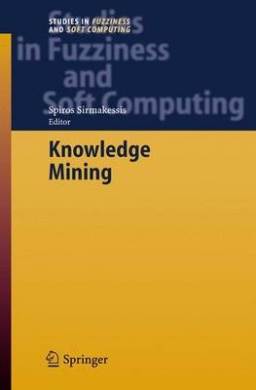
Text mining is an exciting application ?eld and an area of scienti?c – search that is currently under rapid development. It uses techniques from well-established scienti?c ?elds (e. g. data mining, machine learning, infor- tion retrieval, natural language processing, case-based reasoning, statistics and knowledge management) in an e?ort to help people gain insight, und- stand and interpret large quantities of (usually) semi-structured and unstr- tured data. Despite the advances made during the last few years, many issues remain unresolved. Proper co-ordination activities, dissemination of current trends and standardisation of the procedures have been identi?ed, as key needs. There are many questions still unanswered, especially to the potential users; what is the scope of Text Mining, who uses it and for what purpose, what constitutes the leading trends in the ?eld of Text Mining – especially in relation to IT – and whether there still remain areas to be covered. Knowledge Mining draws upon many of the key concepts of knowledge management, data mining and knowledge discovery, meta-analysis and data visualization. Within the context of scienti?c research, knowledge mining is principally concerned with the quantitative synthesis and visualization of – search results and ? ndings. The results of knowledge mining are increased scienti?c understanding along with improvements in research quality and value. Knowledge mining products can be used to highlight research opportunities, assist with the p- sentation of “best” scienti?c evidence, facilitate research portfolio mana- ment, as well as, facilitate policy setting and decision making.