Description
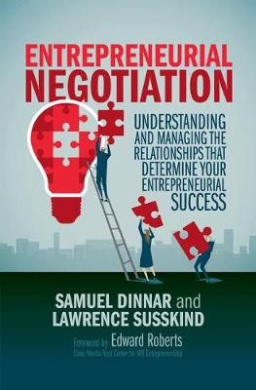
The great majority of startups fail, and most entrepreneurs who have succeeded have had to bounce back from serious mistakes. Entrepreneurs fumble key interactions because they don’t know how to handle the negotiation challenges that almost always arise. They mistakenly believe that deals are about money when they are much more complicated than that. This book presents entrepreneurship as a series of interactions between founders, partners, potential partners, investors and others at various stages of the entrepreneurial process – from seed to exit. There are plenty of authors offering ‘tips’ on how to succeed as an entrepreneur, but no one else scrutinizes the negotiation mistakes that successful entrepreneurs talk about with the authors. As Dinnar and Susskind show, learning to handle emotions, manage uncertainty, cope with technical complexity and build long-term relationships are equally or even more important. This book spotlights eight big mistakes that entrepreneurs often make and shows how most can be prevented with some forethought. It includes interviews with high-profile entrepreneurs about their own mistakes. It also covers gender biases, cultural challenges, and when to employ agents to negotiate on your behalf. Aspiring and experienced entrepreneurs should pay attention to the negotiation errors that even the most successful entrepreneurs commonly make. Samuel Dinnar is an instructor at the Program on Negotiation at Harvard Law School, with a 25-year track record as a global entrepreneur, hi-tech executive, board member, and venture capital investor. He is a strategic negotiation advisor and a mediator specializing in business conflicts involving founders, investors, and board members in early-stage, high-growth and distressed companies. Lawrence Susskind has been an innovator and Professor at MIT for more than forty-five years. He is one of the founders and directors of the Program on Negotiation at Harvard Law School, and a founder of the Consensus Building Institute. He has trained tens of thousands of students and executives globally, and has published twenty books. 1. Entrepreneurship: The Good, the Bad and the TerribleGood: When Co-founders Get Started Bad: When Angels Sing and Investors Dance Terrible: When Dogs-Eat-Dogs How to Use this Book Something Better: An Alternative Good Ending 2. The Entrepreneurial World The Entrepreneurship Process in Stages: from Seed to Exit Entrepreneurs Who Can Negotiate Can Make Things Happen A Map of the Entrepreneurial Galaxy Create Disruption, Thrive on Change, and Adapt Innovation Does Not Mean Reinventing Every Wheel Negotiation is a Vitally Important Entrepreneurial Skill 3. When Entrepreneurs Negotiate Entrepreneurs Must Take Risks What Made You Successful, Can Get You in Big Trouble Entrepreneurial Negotiation Can be Learned Negotiate Better and Become a Better Leader The 8 Most Dangerous Mistakes That Entrepreneurs Make How to Use the Recorded Cases That Follow 4. Listen to Real Entrepreneurs Describe their Mistakes Listen to Real Entrepreneurs Describe their Mistakes Case A – Illai Self-Centered Seed Stage Pitch Case B – Ailis Overly Optimistic Seed Stage Non-Investment Case C – Vinayak Winning at Competing First Term Sheets Case D – Barbara Compromising for Quicker Growth Stage Hiring Case E – Stephen Alone and Not Prepared to Sell the Company Case F – Dip Haggling to Extend the Runway Case G – Ben Intuitive Shift of the Revenue Growth Case H – Petra & Peter Non-Emotional Selling of their Company Reflections on the Eight Cases 5. The Entrepreneurial Galaxy Reimagined: Prevent, Detect and Respond to Your Mistakes Entrepreneurship As a Series of Negotiations Negotiating with Different Categories of Players Prevent Mistakes Before They Occur Detect Mistakes As You Make Them Reflect on Mistakes After Each Negotiation is Over Overcoming Biases and Challenges of Culture and Gender Using Agents to Negotiate on Your Behalf 6. Know Your Entrepreneurial Self Know Your Negotiating Self Dealing with the Most Dangerous Mistakes Develop The Skills You Need Keep Reflecting on Your Personal Theory of Practice Continue to Improve Soar with Your Strengths Develop and Support your Team Help Spread The Word! Appendix – Theory of Practice Tools and Templates