Description
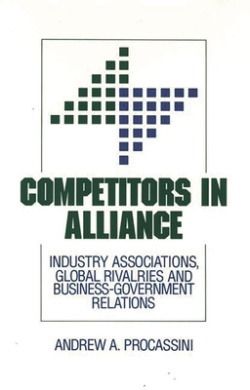
This work argues that by understanding the historical antecedents and current organisation of industry associations, business and government will better be able to help restructure them and thus assist American industry against foreign competition. Procassini maintains that American associations can and should be reorganised by reviewing and comparing their origins and operations today to similar associations in America’s two major trade competitors: Germany and Japan. The author compares US industry associations to those in Germany and Japan in two ways. First, he looks at their past legacies and present mandates; then, with special emphasis on America’s major high-tech industries, he analyses their organisation and operation. After a general overview of the past, present and foreseeable future of associations and a detailed study of those in the US, Germany and Japan, he turns to specific industries – aerospace, biotechnology, semiconductors and computer systems – and their trade associations, defining and comparing the characteristics of each. Part Four of the book explores the ways in which associations fail, as well as succeed, in the mission demanded of them today. From this analysis, and the author’s extensive experience as a corporation and association executive, emerge a series of recommendations for redefining the associations’ mission in today’s global economy, and a blueprint for achieving these goals.