Description
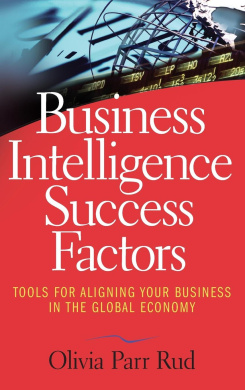
Why BI-intensive companies fail to thrive during economic volatility and how they can become more adaptable and resilient Written by an expert in data mining and business intelligence, this timely book discusses the latest practices emerging in organizational development that support business intelligence-intensive companies. Thoroughly exploring components of quantum physics, chaos theory, complexity science, and evolutionary biology to provide a scientific framework for a new corporate model, Business Intelligence Success Factors explains why these practices and competencies are critical given the speed of change, globalization, and advancements in technology and business intelligence. Olivia Parr Rud (Philadelphia, PA) is the principal of OliviaGroup, a consulting firm that provides facilitation and training in the areas of organizational adaptabilty, leadership development, team-building, and skill development in the areas of collaboration, communication, and innovation. Olivia Parr Rud is the President and founder of OLIVIAGroup, a consulting firm that helps companies maximize business potential. Through OLIVIAGroup, she works with organizations to fully leverage the power of Business Intelligence by offering organizational alignment assessments, leadership development and skill building in the areas of communication, innovation, and adaptability. Her organizational consulting is offered in partnership with leading experts in the areas of leadership development, personal development, and organizational alignment. About the Contributors. Preface. Acknowledgments. PART ONE The Landscape. Chapter 1 The Evolving Business Landscape. Navigating Uncharted Waters. Shifting from Reactive to Proactive. Strategies for Capturing Value. Motivation for Change. The Evolving Organization. Chapter 2 Models from Science and Nature. Quantum Physics. Evolutionary Biology and Living Systems. Complexity Science and Chaos. Systems Theory and Systems Thinking. PART TWO The Success Factors. Chapter 3 Effective Communication. Benefits of Effective Communication. Principles of Communication. Communication in a High-Tech Economy. Nonverbal Communication. Theory of Relational Coordination. Principles of Dialogue. Art of Listening. Storytelling. Chapter 4 Collaboration. Collaborating for the Future. Creating a Collaborative Culture. Building Collaborative Teams. Value of Trust. Collaborative Technologies. Collaboration in Action: A Case Study. Chapter 5 Innovation. Creativity. Innovation in the Marketplace. Tips from the Field. Chapter 6 Adaptability. The Shifting Paradigm. Traditional Methods. The New Paradigm. Models for Adaptive Organizations. Leveraging Chaos in Organizations. Conflict Resolution: A Living Systems Approach. The Learning Organization. A New Global Organization. Chapter 7 Leadership. The Conscious Leader. Social Intelligence. Paradox of Empowerment. 10 Principles for Leading a Dynamic Organization. Tapping Organizational Wisdom. PART THREE Models and Practices. Chapter 8 Systems Thinking. Basics of Systems Thinking. Systems View of Business Analytics. Chapter 9 Holacracy. Evolving the Organization. Introducing Holacracy. Organizational Structure. Organizational Control. Core Practices. Shared Language and Meaning. PART FOUR Beyond Our Corporate Borders. Chapter 10 Possibilities. Holacracy in the World. Edgewalkers. Organizations on Purpose. Bottom Line. Appendix A: Resources. Appendix B: Suggested Reading. About the Author. Index.